
Modern and advanced technology has caught up with street flushing industry. With increasing demands for better efficiency, safety, lower maintenance costs, and improved working conditions, manufacturers of street sweepers have utilized cutting edge technology to their design, power, versatility and productivity. Nowadays, street sweepers are not only built based on accepted standards of efficiency, but also on the comfort of the operator.
In Greater Toronto Area in the progressive Ontario province, there is a demand for modern sweepers for their street flushing operations. Street flushing has always been part of their road maintenance projects. This is because of the fact that road dusts have shown to have major health impacts and environmental repercussions to both air and water. Road dusts are particulate matter that comes from emissions of vehicles and industrial units, tire wear and pavement wear.
They are found to contain toxic substances; and, when carried as storm water runoff or becomes airborne as fugitive dust, they contribute to water and air pollution. For this reason, GTA has been active in promoting regular street flushing and sweeping.
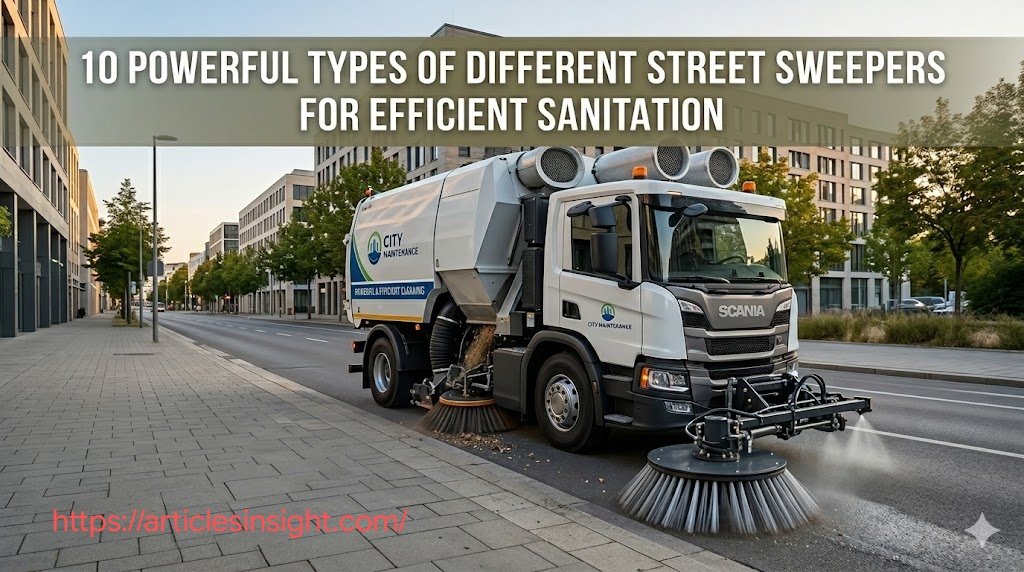
Studies have shown that pollutant load is greatest with particulate matter measuring ten micrometers in diameter. This sparked the emergence of modern day sweepers. Traditional ones are mechanical with brooms and a conveyor belt. The brooms rotate to free the accumulated debris; after which, the conveyor belt collects the debris and transfer them onto a hopper. The next generation of sweepers to come out are vacuum assisted.

They also have brooms that make the sweeping; in addition, they are equipped with a vacuum that collects debris directly onto the hopper. Additional studies have concluded that tandem street flushing and sweeping operation yield a more significant decrease in pollutant load. Tandem operation is the combined use of the mechanical followed by the vacuum assisted sweeper.
The pick-up performance is better in street flushing and sweeping operation. Another technology of sweepers is the regenerative air sweeper. This makes use of air that is blown to the pavement to loosen accumulated dirt. This type of sweeper is found to be effective in collecting fine particulate matter.
Modern day sweepers are made to be efficient in collecting fine sediments to achieve a higher performance in street flushing and sweeping; and in addition, manufacturers have revolutionized sweepers to achieve comfort to the operator. Recent sweeper models feels like driving a car. Installed windshields are wider to give the operator a better view of the outside.
Multiple side mirrors are also placed. This provides safety for pedestrians and other cars because the operator has an unobstructed view from his or her vantage point. Newer sweeper models have front wheel steering for easier maneuverability. With vehicle handling like that of a car, sweepers can easily maneuver around parked cars when making their rounds. Sweepers are also equipped with air-conditioning and an AM-FM radio for the comfort of the operator. New sweepers also boast of bigger and stronger engines for better performance and easier maintenance.
Technology will continue to change the face of modern-day sweepers. To achieve the maximum performance in street flushing should be the primary priority.